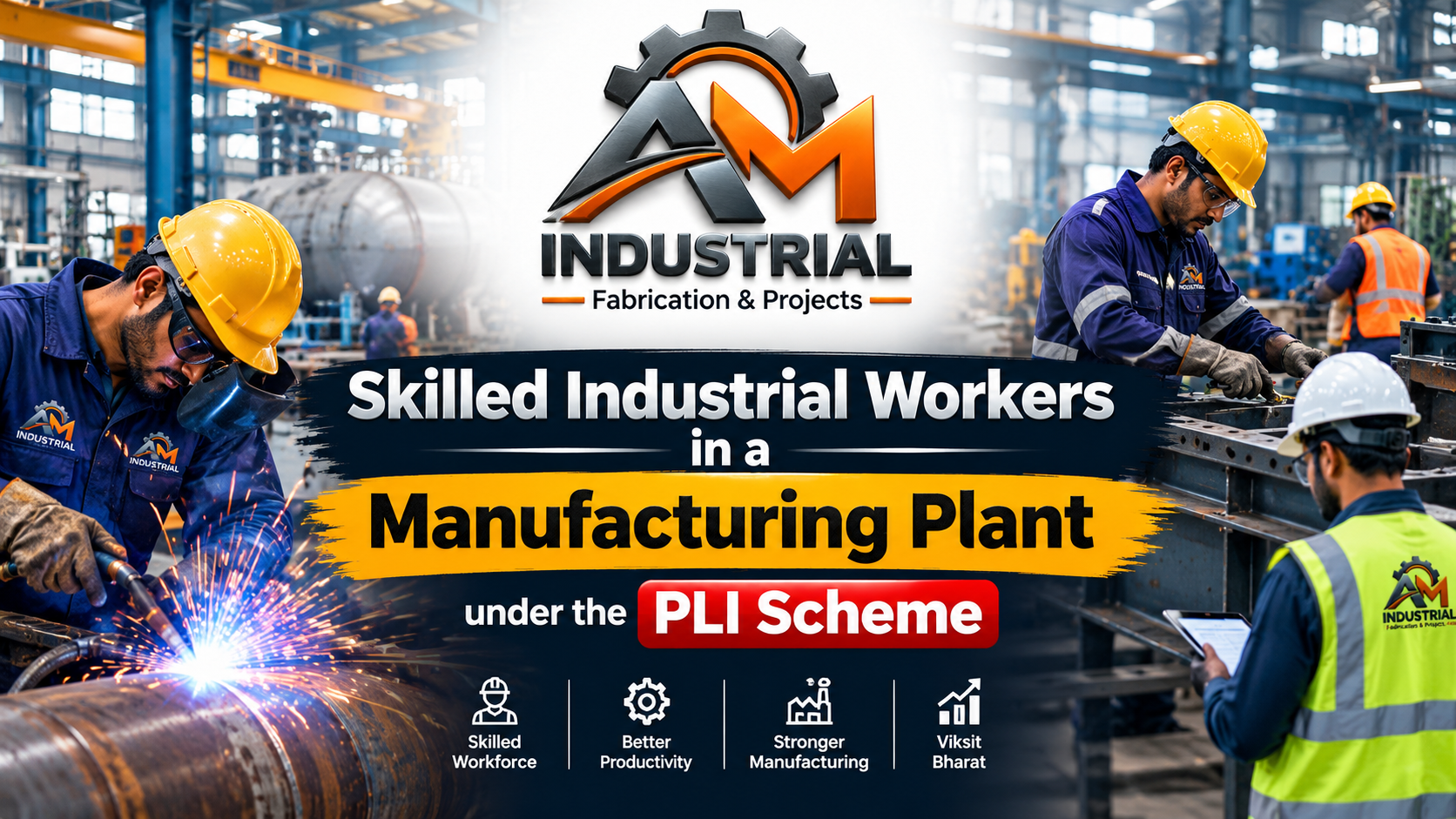
PLI Scheme and the Coming Wave of Industrial Jobs
India's manufacturing story is increasingly being written on factory floors, fabrication yards, plant sites and production lines. At the centre of this shift is the Production Linked Incentive (PLI) scheme, a government initiative designed to attract investment, expand domestic manufacturing and strengthen exports.
But behind the investment figures and production numbers, there is a more practical question for companies, contractors and workers: what does all this mean for jobs?
This article looks at PLI scheme jobs India is generating, how Make in India employment is evolving, and why industrial manpower demand in PLI sectors is likely to remain an important workforce topic through 2026 and beyond.
What Is the PLI Scheme and Why Does It Matter for Jobs?
The Production Linked Incentive scheme offers companies incentives linked to incremental sales of products manufactured in domestic units. The idea is simple: reward companies that build real manufacturing capacity in India.
The scheme was launched in 2020 and now covers 14 key sectors with an approved outlay of Rs 1.91 lakh crore. These include large-scale electronics, pharmaceuticals, medical devices, telecom and networking products, food processing, white goods, automobiles and auto components, textiles, specialty steel, advanced chemistry cell batteries, drones and high-efficiency solar PV modules.
Every new production line needs people to build it, install it, operate it and maintain it. That is why manufacturing incentives eventually become a workforce story.
PLI Scheme Jobs in India: Where the Numbers Stand in 2026
According to a written reply given in the Lok Sabha in July 2026, the PLI schemes had attracted actual investment of more than Rs 2.40 lakh crore and generated over 14.15 lakh direct and indirect jobs as of 31 March 2026. Cumulative exports across the PLI sectors were reported at over Rs 15.2 lakh crore.
The same reply highlighted some sector-level outcomes:
High-efficiency solar PV modules attracted the highest cumulative investment, at Rs 64,873 crore.
Pharmaceuticals followed with Rs 45,158 crore, and automobiles and auto components with Rs 44,326 crore.
Mobile phone production has risen around 2.4 times since the scheme was launched.
The medical devices scheme has supported domestic manufacturing of equipment such as CT scanners and MRI systems.
The white goods scheme helped expand domestic compressor capacity from 1 million to 10 million units by 2025-26.
It is worth noting that these job figures include both direct and indirect employment. Direct jobs sit inside the manufacturing units, while indirect jobs are created across suppliers, logistics, construction, installation and maintenance. For contractors and manpower providers, much of the opportunity sits in this wider ecosystem.
Make in India Employment: How PLI Fits the Bigger Picture
PLI is only one part of the broader Make in India effort. Make in India 2.0 focuses on 27 sectors, including 15 manufacturing sectors, implemented through various ministries, departments and state governments.
For employment, this means the demand for workers does not come from PLI beneficiaries alone. It also comes from the suppliers, component makers, fabrication vendors and project contractors that grow around them.
When a large manufacturer sets up or expands a plant, the workforce requirement typically comes in stages:
Construction and civil phase: site preparation, structural work, fabrication and erection
Installation phase: machinery installation, piping, electrical work and instrumentation
Commissioning phase: testing, quality checks and safety verification
Operations phase: production, maintenance, quality control and supervision
Each stage needs a different mix of skills, which is why workforce planning matters as much as the investment itself.
Industrial Manpower Demand in PLI Sectors
Different PLI sectors create different types of workforce demand. The following is a practical view of where skilled manpower is likely to be needed.
Electronics and IT Hardware
Electronics manufacturing depends on production operators, technicians, quality inspectors and maintenance teams. Alongside the production lines, factory buildings, utilities and cleanroom-style facilities need electrical, mechanical and installation work.
Pharmaceuticals and Medical Devices
Pharma and medical device plants require strict quality, hygiene and documentation standards. Beyond production staff, these facilities often need skilled pipe fitters, welders, electricians, instrumentation technicians and QA/QC professionals.
Automobiles and Auto Components
Auto and component manufacturing relies on machine operators, CNC operators, fitters, welders, tool room technicians and maintenance teams.
Solar PV Modules and Battery Storage
Renewable energy manufacturing needs production technicians, electricians, mechanical fitters and utility maintenance staff, along with structural and plant installation work during setup.
White Goods, Telecom and Networking Products
Assembly lines, component manufacturing and testing facilities create demand for operators, technicians, quality inspectors and supervisors.
Specialty Steel, Textiles and Food Processing
Heavier industrial setups such as steel and processing plants typically need fabricators, welders, riggers, fitters, maintenance technicians and safety personnel.
Companies setting up or expanding such facilities often need project-based teams for fabrication, erection and installation. Learn more about industrial and structural fabrication services and plant installation support.
Which Skilled Trades Will See the Most Demand?
Based on how manufacturing plants are built and operated, the following trades are likely to see steady demand as PLI-linked and Make in India projects progress:
Welders (structural, pipe and fabrication)
Fabricators and fitters
Pipe fitters and mechanical fitters
Industrial electricians
Instrumentation technicians
Maintenance technicians
CNC and machine operators
QA/QC inspectors
Safety officers and supervisors
Riggers, helpers and site technicians
This list reflects typical plant construction and operating requirements rather than official hiring targets. Actual demand will vary by sector, location and project timeline.
Manufacturing Jobs Growth in 2026: Opportunity and the Skills Gap
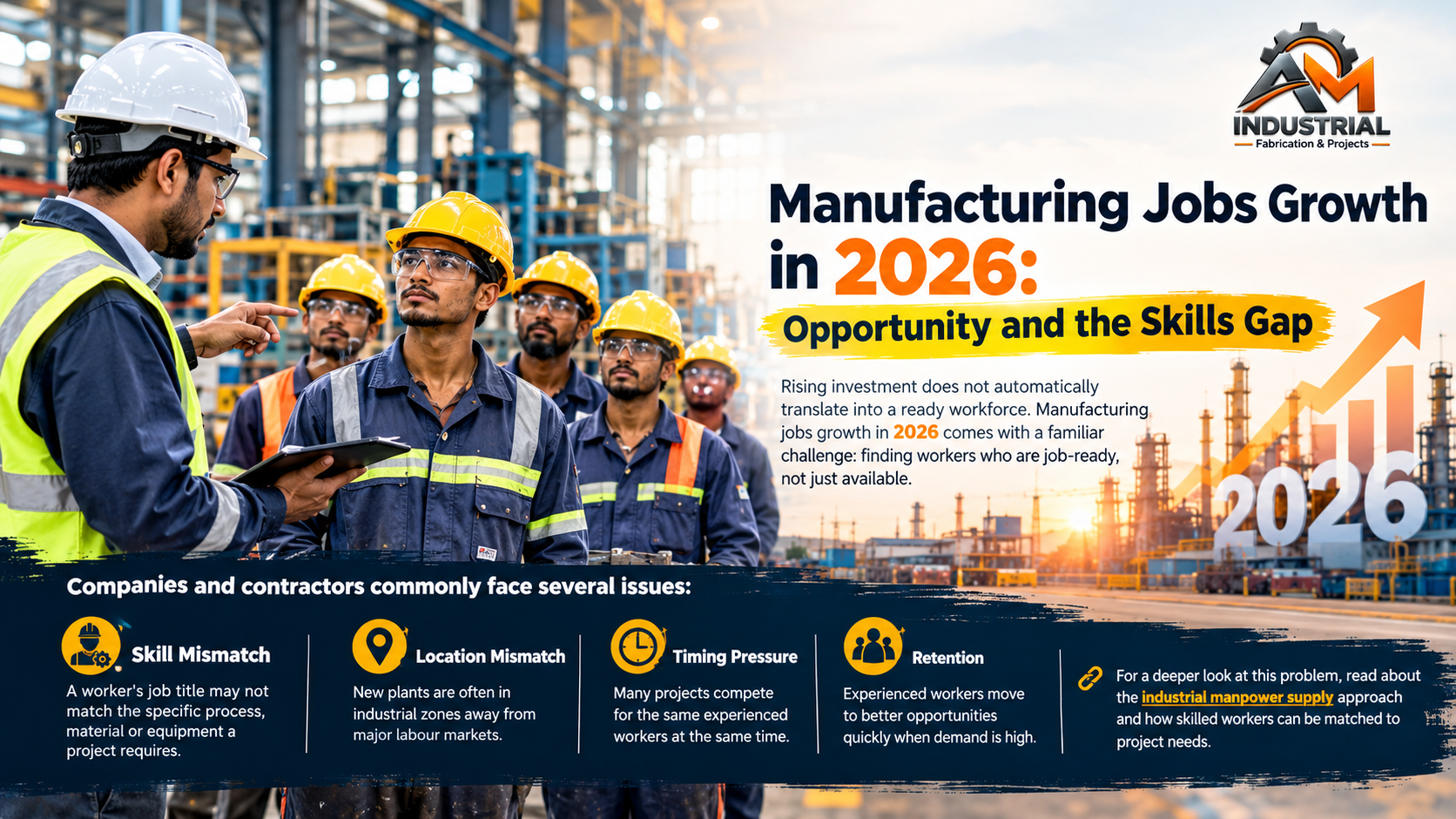
Rising investment does not automatically translate into a ready workforce. Manufacturing jobs growth in 2026 comes with a familiar challenge: finding workers who are job-ready, not just available.
Companies and contractors commonly face several issues:
Skill mismatch: a worker's job title may not match the specific process, material or equipment a project requires.
Location mismatch: new plants are often in industrial zones away from major labour markets.
Timing pressure: many projects compete for the same experienced workers at the same time.
Retention: experienced workers move to better opportunities quickly when demand is high.
In other words, the opportunity is large, but so is the need for structured hiring, skill verification and planning. For a deeper look at this problem, read about the industrial manpower supply approach and how skilled workers can be matched to project needs.
What Industrial Companies and Contractors Should Do Now
Plan Manpower Before the Project Starts
The earlier a project's manpower requirement is mapped, the more time there is to source and verify workers. Last-minute hiring is usually more expensive and less reliable.
Define Skills Precisely
Instead of asking for "20 welders", specify the welding process, material, certification, years of experience, location and joining date.
Verify Skills Before Deployment
Practical tests, certification checks and project history reviews can reduce mismatches and rework.
Build a Reliable Worker Network
Contractors that maintain relationships with experienced workers can respond faster when new projects begin.
Focus on Retention
Clear payment terms, safe working conditions, respectful supervision and visibility on future projects help keep skilled workers engaged.
Industrial contractors can also explore support designed for contractors, and companies with larger requirements can look at industrial project execution support where manpower, fabrication and site execution are coordinated together.
What Workers Can Do to Prepare
Workers also have a role in benefiting from the wave of industrial activity. Practical steps include:
Build hands-on experience on real industrial sites
Keep trade certificates and safety training up to date
Improve drawing-reading and measurement skills
Learn modern tools, equipment and basic digital documentation
Maintain a clear record of previous projects and responsibilities
Stay open to upskilling as technology changes the shop floor
Workers in welding, fabrication, fitting, electrical and maintenance trades who combine practical experience with safety awareness are well placed to benefit from industrial expansion.
How AM Industrial Supports Manpower for Growing Industries
As new plants, fabrication projects and installation work increase, companies need dependable access to skilled workers. AM Industrial focuses on industrial manpower, fabrication and project support requirements. You can learn more about the company and the industries it works with.
Depending on the project, requirements can include welders, fabricators, fitters, helpers, technical personnel and supervisors. You can explore industrial manpower services, view examples in the project gallery, or request a quote for your requirement.
Conclusion
The PLI scheme has already shown measurable results in investment, exports and employment across its 14 sectors. As Make in India continues to expand manufacturing capacity, the demand for skilled industrial workers is likely to remain an important part of the story.
The opportunity is clear, but so is the requirement: the workforce must be skilled, verified and ready for real industrial conditions. Companies that plan manpower early, define skills clearly and invest in retention will be better positioned to execute projects on time. Workers who keep building practical skills will find more openings as industrial activity grows.
Companies looking for project-ready manpower can discuss their requirement directly with an established industrial partner.
Frequently Asked Questions
What is the PLI scheme?
The Production Linked Incentive scheme offers incentives to companies based on incremental sales of products manufactured in India. It covers 14 key sectors and aims to boost manufacturing, investment, exports and employment.
How many jobs has the PLI scheme created?
According to a government reply in the Lok Sabha in July 2026, the PLI schemes had generated over 14.15 lakh direct and indirect jobs as of 31 March 2026.
What is the connection between PLI and Make in India employment?
PLI is one of the tools supporting Make in India by encouraging domestic manufacturing. As new factories and production lines are set up, they create jobs in production, construction, installation, maintenance and supply chains.
Which sectors are covered under the PLI scheme?
The scheme covers 14 sectors, including electronics, IT hardware, pharmaceuticals, medical devices, telecom and networking products, food processing, white goods, automobiles and auto components, textiles, specialty steel, advanced chemistry cell batteries, drones and solar PV modules.
Which skilled workers are likely to be in demand?
Welders, fabricators, fitters, industrial electricians, instrumentation technicians, maintenance technicians, machine operators, QA/QC inspectors, safety personnel and supervisors are commonly needed for plant construction and operation.
Why do companies still struggle to find skilled workers?
Many companies need workers with specific technical experience, certifications and availability at a particular location and time. The gap between general labour availability and job-ready skilled manpower creates hiring difficulty.
How can contractors prepare for rising industrial demand?
Contractors can plan manpower early, define skill requirements precisely, verify skills before deployment, maintain a network of experienced workers and focus on retention.
How can workers benefit from industrial growth?
Workers can improve their prospects by building practical experience, keeping certificates updated, learning safety procedures, improving drawing-reading skills and staying open to new technologies.
Final Takeaway
Investment builds factories, but people make them run. As the PLI scheme and Make in India continue to expand India's manufacturing base, the real advantage will go to companies and workers who prepare early for the skills that industrial growth demands.